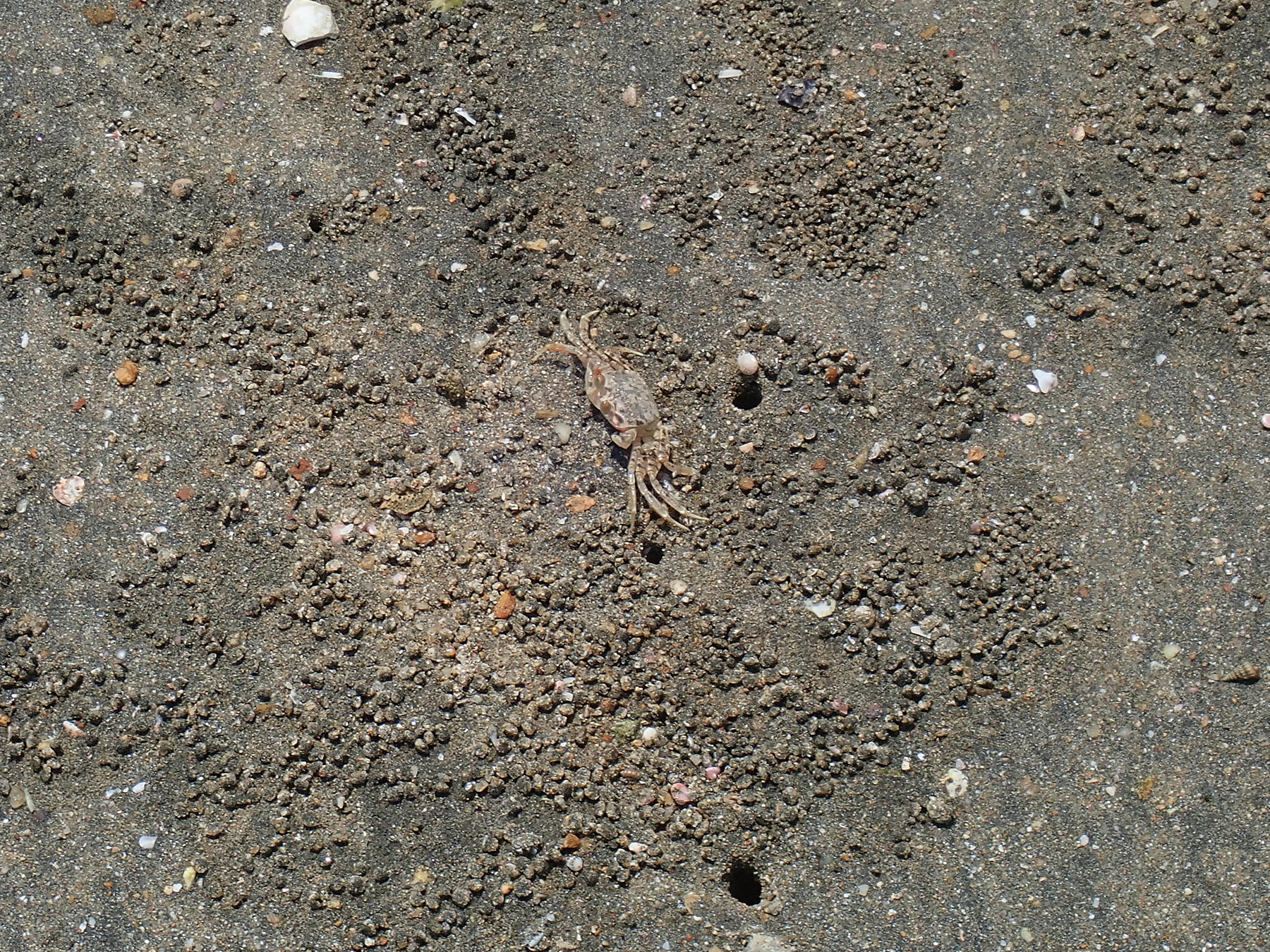
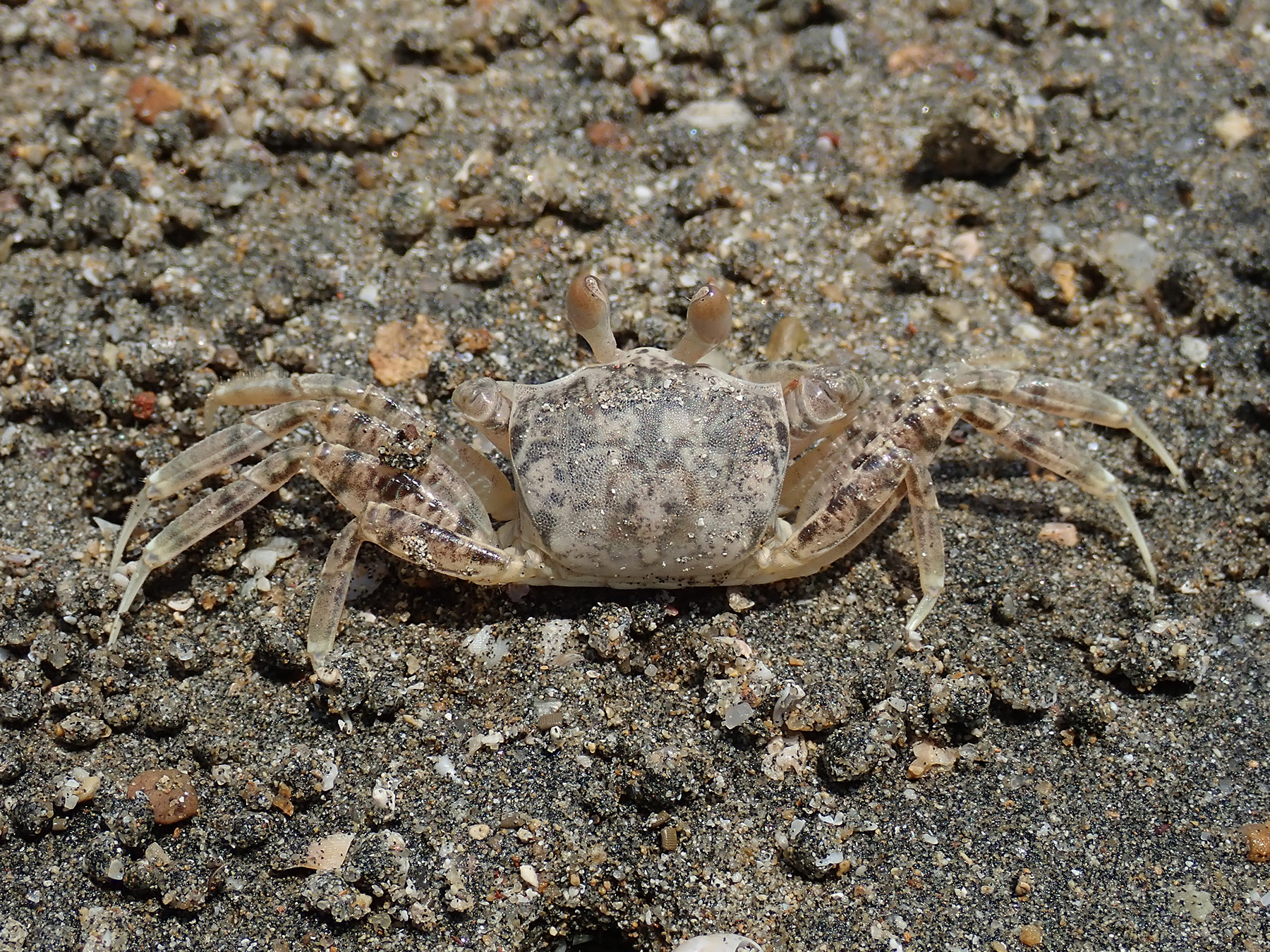
Do you believe that ghosts exist? There is not yet scientific evidence to prove the existence of ghosts. But have you ever seen a "ghost-like" crab run swiftly in the blink of an eye on a sandy shore? This 4 cm-long tiny creature can surprisingly run about 2 m per second, equivalent to moving at 50 body-lengths per second. It is virtually "Usain Bolt" among crabs! If we compare their relative body lengths and moving speed, we may conclude they are able to run even faster than the fastest land animals, like cheetahs and Usain Bolt, the no. 1 sprinter, running at the speeds of about 10 and 20 body-lengths per second, respectively.
This ghost-like crab, known as "ghost crabs", is under the genus Ocypode, which literally means "swift-footed" in Latin. With their pale-coloured bodies, they become almost invisible on the sand and are usually found on higher tidal levels of shores. Thanks to their special club-shaped eyestalks, ghost crabs have 360° vision, thereby they are highly vigilant to movements in the surroundings. They can dart away at the slightest sign of danger. Breathing with gills, they need to retain moisture in gills all the time to inhale oxygen. To avoid drying out, they usually stay in burrows during day time and crawl out for feeding after dark. Ghost crabs are omnivorous creatures, feeding on various kinds of animals and plant materials, including mollusks, crustaceans and algae, etc.
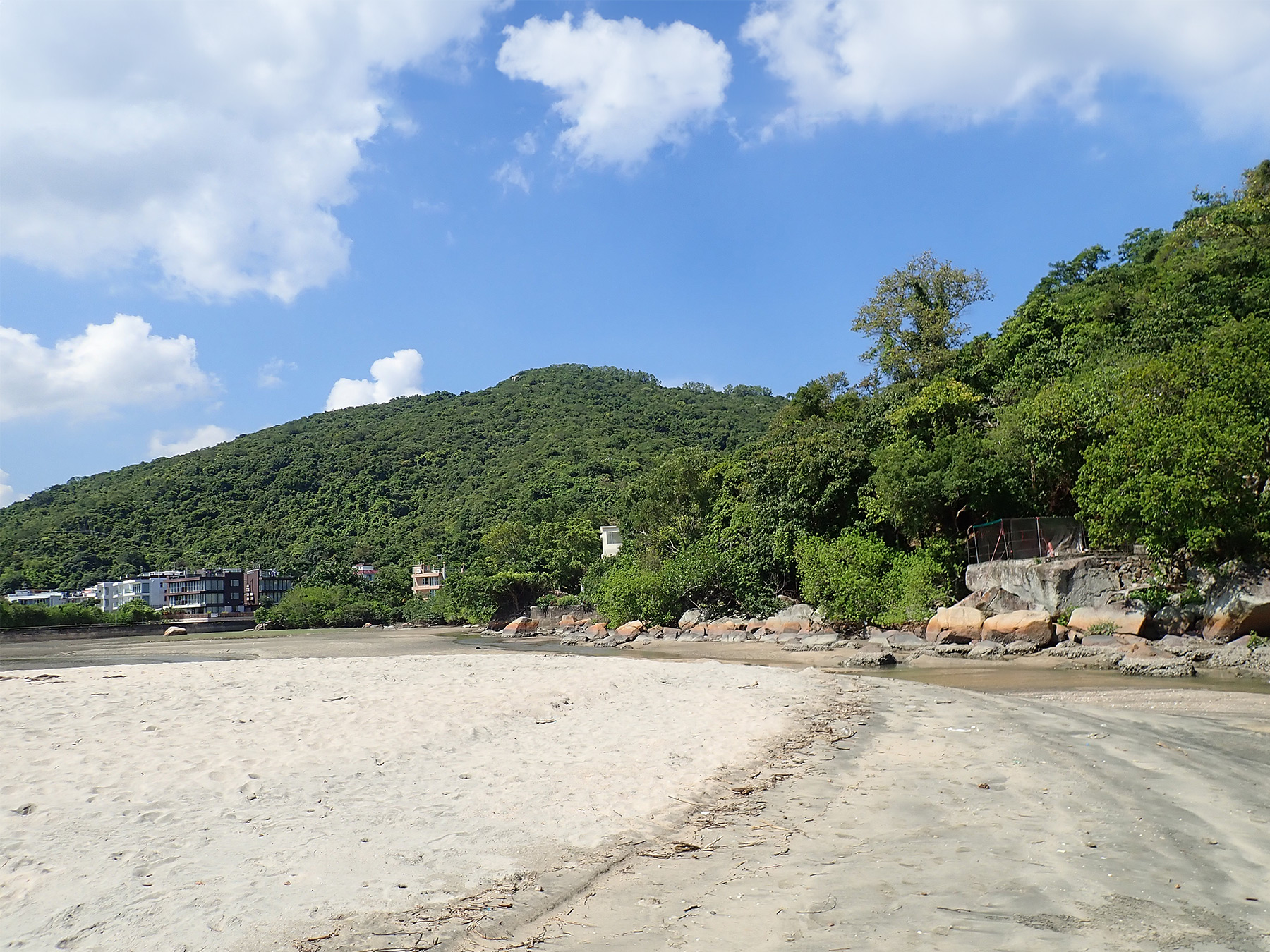
Ghost crabs, commonly found along sandy shores in Hong Kong, along with their habitats, are highly susceptible to the negative impacts caused by human activities, such as sand trampling by foot traffic, construction of seawalls, discharge of inorganic pollutants, etc. Given their wide global distribution and the ease by which their burrows can be surveyed, the presence of ghost crabs may be regarded as an important ecological indicator, adopted in quick assessments of the anthropogenic impacts on sandy shores. In your next beach outing, you may enjoy watching a sprint among these "Usain Bolts" of the crab world.